Read it in layers
A diff arrives in alphabetical order, which is almost never the order it should be read in. Layers are the agent's reading plan: the change as ordered steps, each with a title, a short summary, and the files that belong to it. You read one layer at a time, in the order the agent would explain it.
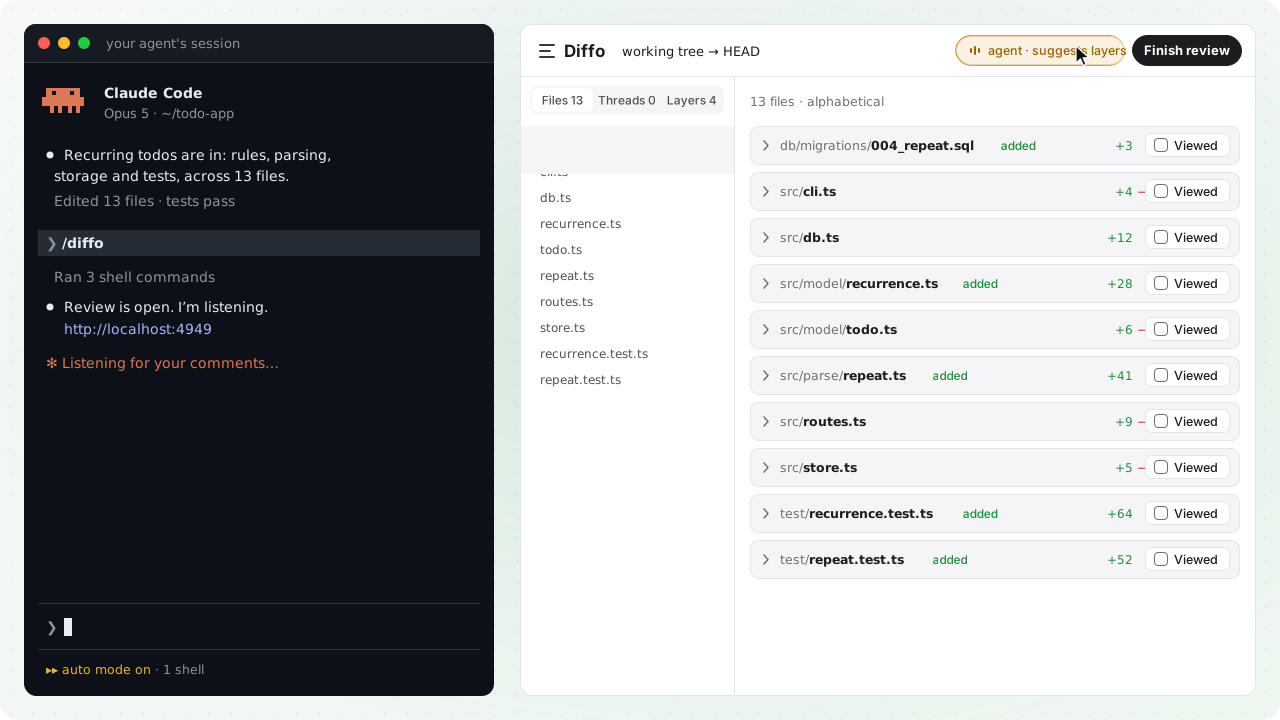
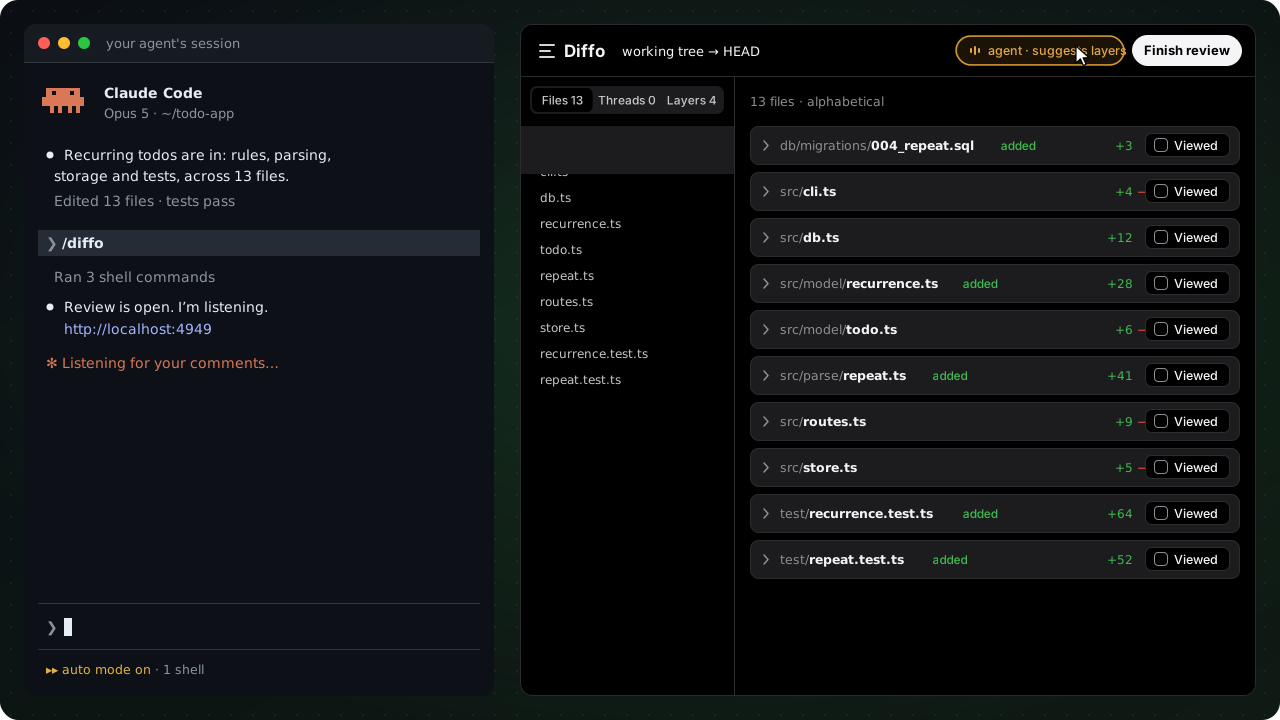
Layers come from the agent only. The session that wrote the change still remembers the order it would explain it in; Diffo never guesses a plan from paths, and with no layers the review is exactly the flat file list.
Asking for them
Three ways in, all the same ask:
- The header chip. When the agent thinks the change reads better in order, it says so at open, and the header shows agent · suggests layers with the agent's reason beside it. One click.
- The Layers tab. Its Ask the agent to outline button works whether the agent suggested it or not.
- In the terminal. Say "layers" to the agent. It offers exactly this in its handoff message when it suggests them.
The ask reaches the agent through its poll. The tab reads Outlining… and the presence chip outlining layers until the outline lands, a moment later.
Reading one at a time
Picking a layer narrows the reading pane to its files, under a card with the layer's summary. The card renders markdown, and a mermaid diagram when the step has a shape, the same way a thread does; a file the summary names is a click away.
| Key | |
|---|---|
] / [ | Next / previous layer |
. | Next decision in this layer |
n | Next unread file, rolling from one layer's last unread file into the next |
J / K | Next / previous file, staying inside the active layer |
Each layer carries its own progress, read off the same hunk marks Finish review reports. A layer tagged mechanical changes no behaviour, a rename or call sites following a signature, and keeps its files folded.
On a pull request, row 0 of the list is the Overview: the pull request's description, in the place a guide takes on a local review. See Reviewing a pull request.
Decisions
Under a layer's summary the agent may list its decisions: what it chose, found, or ran into while making this step, one short line each. Most layers have none. A plumbing step has nothing to decide, and the list is absent rather than empty.
A decision is one of three things, and the line says which without a label:
- the agent chose between real alternatives you might weigh differently: a cache, a data shape, a fallback
- the code now does something the diff does not make obvious: a 400 where there was an empty list, a sort every caller sees
- something in the repo or the environment shaped the change: no clock on the model, tests that could not run
Each line is a plain statement a teammate who has not seen the code gets in a second: the effect, not the mechanism. Read the lines before the diff, or instead of it. Click one and the card opens under it: one sentence from the agent, then a chip for each place the decision names (a decision can span hunks, the rule and the test that pins it) that goes there, and Comment. . walks the layer's decisions one by one, landing on the first place of each.
Comment opens the layer's own comment box with the decision quoted, so the thread sits with the step the agent explained rather than on a line that may move, and the agent knows which decision is meant. Like a summary, a decision never pre-reviews: it says what was done and why, never whether it is fine.
The plan stays honest
Layers are resolved against the live changeset on every refresh. A file the agent touches after posting, or one no layer names, gathers in a trailing Since your review layer, so nothing hides outside the plan. One line at the foot of the tab asks the agent to re-outline, and a re-post keeps your place for every title that survives.
Read marks live on hunks, not on layers, so a re-post can never lose one.
Commenting on a layer
A question about the step itself, not a line in it: why these files belong together, whether the order is right, a summary that says too much. The layer's card has Comment on this layer in its corner, and the thread lives under the card, with the agent on the other end like any other thread. The agent is handed the layer as it was outlined when you wrote the comment, title, summary and files, so a later re-post never changes what you were asking about.
A layer thread follows its layer by title across re-posts. A re-post that drops the title retires the thread with it: it moves to the threads the changeset left behind, intact, and a thread you had sent reads as addressed.
Only the agent's layers take a comment. Since your review is Diffo's, not the agent's, and the pull request Overview is the description: comment on those the way you would on the whole changeset. On a pull request a layer thread is always private; GitHub has no layers to post it to.
What a layer may say
A summary follows the guide's rule: it orients your reading and never pre-reviews it. It says what the step is about and gives the context its files cannot show on their own; no verdicts, nothing declared "fine". The order is the order you would explain the change in, the file that explains the rest first and mechanical consequences last, not the order it was written in.
The agent's side
Two commands: diffo layers --suggest "<why>" at open, and diffo layers --json '<Layer[]>' to post, only when you ask. Layers in the agent protocol has the doctrine, and the CLI reference has the shape of a layer.